South Africa’s National Treasury is proposing to amend its carbon tax legislation to encourage renewable energy initiatives. The proposal is part of the draft 2024 Tax Laws Amendment Bill, which aims to modify the Carbon Offset Regulations, allowing taxpayers involved in embedded generation to reduce their carbon tax obligations. The current Carbon Tax Act allows taxpayers to claim a carbon offset allowance of up to 10% of their emissions, with small-scale renewable energy projects eligible for these offsets.
PwC’s tax professionals have highlighted that the Carbon Tax Act allows taxpayers to claim a carbon offset allowance of up to 10% of their total greenhouse gas emissions, reducing their carbon tax burden. The current regulations specifically mention small-scale renewable energy projects with a capacity of 15MW as eligible.
The proposed amendments aim to expand the qualifying limit for carbon offset allowances to 30MW of installed capacity, allowing larger embedded generation projects to benefit. They also provide Eskom with assurance regarding offset deductions for electricity acquired through power purchase agreements assigned to the National Transmission Company of South Africa, reflecting the ongoing restructuring of the electricity sector.
Reduced pressure on the National Power Grid
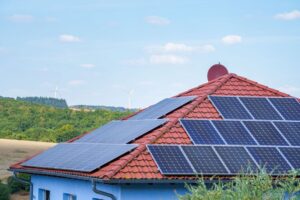
South Africa added 350MW of new solar capacity in Q2 2024, increasing the total installed capacity to 5,790MW. This growth is significant, as load shedding has decreased significantly, with Eskom achieving 139 consecutive days of stable electricity supply. Since the beginning of the year, the country has added 586MW in rooftop solar installations. Eskom has made notable progress in improving its generation capacity and energy availability. However, the organization is facing a lasting reduction in demand as a result of the increasing adoption of self-generation and renewable energy sources across the nation.
Despite the advancements in its generation fleet and enhanced energy availability, Eskom is contending with a sustained decline in demand. This shift is largely attributed to the growing implementation of self-generation and renewable energy initiatives within the country.
Eskom, despite improvements in generation and energy availability, is facing a reduction in demand due to the rise of self-generation and renewable energy sources. Private renewable energy generation alleviates grid pressure and enables Eskom to focus on plant maintenance. South Africa’s installed solar capacity reached 9,291MW by 2023, with projections for an increase to 28,634MW by 2028. Proposed tax reforms aim to encourage business expansion and green economy investment, taking effect on January 1, 2024.